Unattended terminals
When availability is crucial
Where payments are made independently of employees, the requirements change fundamentally. Instead of ease of use, the focus is on stability, integration and continuous operation.
Unattended terminals really come into their own where processes are automated. Differences are less apparent in the range of functions than in the way they are integrated into existing systems and how reliably they work in continuous operation.
Suitable unattended terminals at a glance
All unattended terminals shown here meet the current requirements for card payments in the Swiss market, including the EP2 standard. They support major debit and credit cards as well as contactless payments and are designed for unattended operation.
The decisive factor is not individual functions, but the ability to function stably even without direct support – regardless of location, frequency of use or environmental conditions.
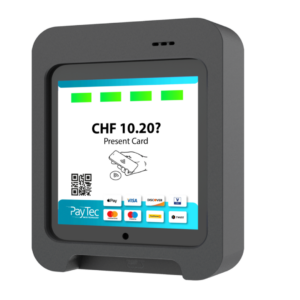
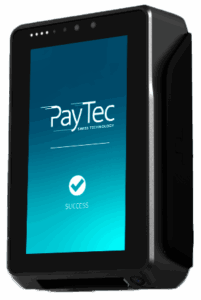
How unattended terminals differ in everyday life
Even with unattended terminals, differences only become apparent during operation. The type of installation, system connection and maintenance accessibility influence how reliably payments can be processed in the long term.
Resistance to weather conditions, simple integration into vending machine control systems and stable network connections play a greater role than additional functions. Robustness is the key to operational reliability, especially in unattended use.
Typical application scenarios
Unattended terminals are useful wherever services are used independently: Vending machines and vending systems, parking machines and ticketing, petrol stations and car washes, self-service access points and automated service points. In these environments, payment becomes part of a technical process – and must function without interruption, even at night, even at weekends, even without someone standing next to it.
What is important when making a selection
With unattended terminals, it is worth taking a look at the overall system:
- How is the terminal integrated into the existing system?
- What are the environmental conditions (indoor / outdoor)?
- How high is the expected utilization?
- What are the requirements for maintenance and remote access?
- How stable must the operation be over long periods of time?
An unattended terminal is a good fit if it fits seamlessly into the automated process.