Mobile terminals
When commitment makes the difference
In mobile situations in particular, it is not just the payment method that determines whether payment works smoothly. The decisive factor is the interaction between the device, handling and suitability for everyday use.
The difference between mobile terminals is not their basic function – they can all accept card payments. The difference lies in how well a device suits daily use. Battery life that lasts through an evening service. A display that can also be read in the sun. Connectivity that works when the WLAN is weak.
You often only notice this when the terminal is used on a daily basis.
Suitable mobile terminals at a glance
All mobile terminals shown here meet the current requirements for card payments in the Swiss market – including the ep2 standard. This means that they support common debit and credit cards as well as contactless payments and are designed for professional everyday use.
Differences do not arise in terms of basic acceptance, but in the design: handling, mobility, runtime and integration determine which terminal makes sense for a particular application.
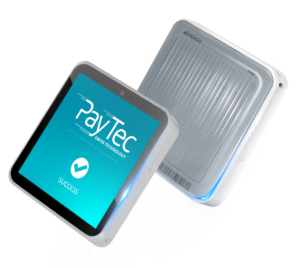
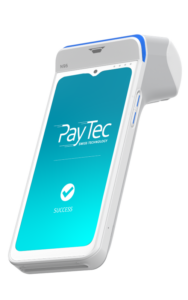
How mobile terminals differ in everyday life
Mobile payment terminals all fulfill the same basic task: they enable card payments regardless of the fixed checkout location. However, there are differences where they are used on a daily basis.
Size and weight influence handling during service. Battery life determines how reliably a device gets through a working day. Connectivity, display and integration into existing POS systems characterize the process – often only noticeable when the terminal is in regular use.
Typical application scenarios
Mobile terminals are useful when payments are made where the customers are – not where the cash register is located. Table service in a restaurant, the market stall on Saturday, the delivery service that collects directly at the door. In all these situations, the terminal is a tool that works in the background – and that’s exactly what it should be.
In these situations, payment becomes part of the process – not the center of it.
What is important when making a selection
Before deciding on a model, it’s worth taking a sober look at your everyday life. Do you mainly work indoors or outdoors? How long is a typical working day without charging? Should the terminal be connected to an existing cash register or does it run independently?
Those who know this will find the right appliance more quickly – and won’t be surprised afterwards.